
Sodium Sulphate (Anhydrous) Procurement Guide Why Green Credentials Are Now a Hard Requirement in Textile Supply Chains
Key Takeaways
? Green compliance is now a procurement variable: The EU EPR framework is accelerating rollout. Henkel, Unilever, and Kao now audit supplier environmental credentials annually. Choosing an ISO 14001-certified sodium sulphate manufacturer is becoming a supply chain risk-mitigation priority.
? QINGYIJIANG Sodium Sulphate Co., Ltd. (QYJSSA) completed its technology transition six years ahead of regulation: MVR process upgrade launched 2018; zero CO2 emissions achieved 2020 — China's first sodium sulphate producer to reach zero direct carbon emissions. Steam consumption cut 99.9%. Fresh water usage cut 88%. Third-party auditable and ESG-report ready.
? Scale gives green credentials real weight: 250 billion tonnes proven reserves. 1 million tonne annual capacity. Customers in 30+ countries. QINGYIJIANG?'s sustainable practices extend beyond internal transformation and set a benchmark for the wider industry.
The global textile dyeing industry is undergoing an irreversible restructuring of procurement standards. Choosing a sodium sulphate supplier is no longer purely a price comparison — it has become part of a supplier ESG compliance review.
In December 2024, environmental activists in Amsterdam stacked a 2.1-metre pile of discarded garments outside a fast-fashion store. The message: "In the Netherlands, this many clothes are thrown away every 10 minutes." Behind this lies the EU's Extended Producer Responsibility (EPR) mechanism and binding legislation requiring the fashion industry to use at least 16.5% recycled materials by 2030.
This pressure is travelling upstream through textile supply chains, reaching every production and procurement node for basic chemical inputs including industrial-grade anhydrous sodium sulphate.
The Role of Sodium Sulphate in Textile Dyeing
Sodium sulphate anhydrous (Na2SO4) is one of the highest-volume inorganic auxiliaries used in textile dyeing. In reactive dyeing for cotton, linen, and synthetic blends, sodium sulphate for textile dyeing acts as a levelling and exhausting agent — raising ionic concentration in the dye bath to promote dye uptake and directly influencing colour fastness, uniformity, and dyeing efficiency.
For finished dyed products to meet specification, sodium sulphate purity and content are critical process variables. High-purity anhydrous sodium sulphate (assay >= 99%, moisture-free, low insolubles, odourless) enables precise dye-bath control, reducing colour variation and minimising wastewater load. For large-scale dyeing mills, this is the primary technical criterion when evaluating a sodium sulphate manufacturer.
The New Procurement Variable: Green Credentials
For years, sodium sulphate procurement decisions were driven by price, assay, and lead time. From 2025 onward, a new dimension is entering supplier qualification at speed: the manufacturer's clean production capability.
Henkel, Unilever, and Kao have publicly committed to supply chain carbon neutrality and now include supplier environmental management systems in annual audits. An ISO 14001-certified sodium sulphate manufacturer already scores materially higher on supplier evaluation matrices than one holding only ISO 9001.
EU Commission data shows global textile waste reaches 92 million tonnes annually. Once EPR mechanisms land, manufacturers will contribute to recycling infrastructure funds, with costs modulated via eco-modulation. The policy chain is clear: brand owner pressure -> fabric mill scrutiny -> green credential checks on chemical raw material suppliers.
For textile dyeing procurement managers, this means: selecting a sodium sulphate supplier with verifiable clean production data — one whose green metrics can go into your supply chain sustainability report — is an immediate risk management priority, not a future consideration.
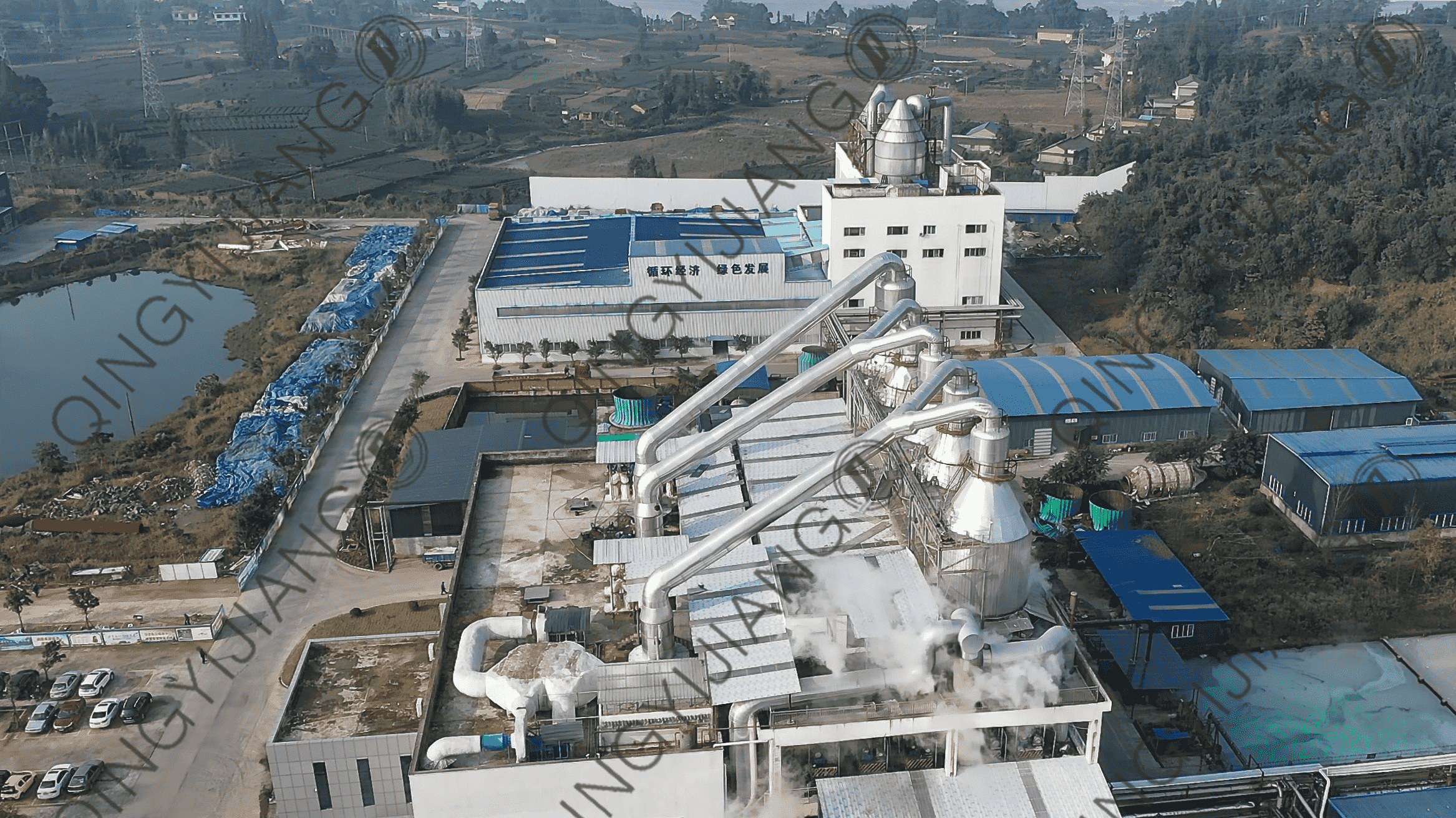
Figure 1:QingyiJiang Sodium Sulphate MVR Zero-Emission Production Line -China's First Green Anhydrous Sodium Sulphate Factory
How to Evaluate a Sodium Sulphate Supplier's Green Credentials
For procurement teams running a sodium sulphate supplier evaluation, use this checklist:
? Certification: Does the supplier hold ISO 14001 EMS certification covering all production processes?
? Process: Has the facility completed MVR or equivalent clean-process upgrade? Is coal-fired evaporation still in use?
? Emissions data: Can the supplier provide verifiable annual carbon and water data? Third-party audited?
? Official recognition: Recognised as National or Provincial Green Factory? Industry demonstration status?
? Traceability: Does mining comply with sustainable extraction standards? Raw material traceable to specific deposit?
Among sodium sulphate producers in Sichuan, China, QINGYIJIANG Sodium Sulphate Co., Ltd. (QYJSSA) is one of the few to have fundamentally restructured its production process. In 2018 the company launched a full MVR (Mechanical Vapor Recompression) upgrade, commissioning new lines in June 2020 and becoming China's first sodium sulphate producer to achieve zero direct CO2 emissions. The MVR process recaptures secondary steam, recompresses it to recover heat, and replaces coal-fired steam generation entirely with electric power.
QINGYIJIANG Sodium Sulphate Co., Ltd. (QYJSSA) holds a clear and verifiable answer across all five dimensions above. Organisations incorporating green credentials into procurement evaluation are welcome to request product specifications and discuss sourcing arrangements.
MVR Process Performance: Before vs. After
400,000 tonne/year MVR vs. conventional 500,000 tonne/year baseline:
Metric | Conventional | MVR | Change |
Annual steam consumption | 500,000 tonnes | 307 tonnes | Down 99.9% |
Annual fresh water usage | 600,000 m3 | 72,000 m3 | Down 88% |
Direct CO2 emissions | Significant | Zero | Eliminated |
Energy source | Coal-fired evaporation | Electric closed-loop | Full replacement |
These figures are auditable, traceable, and directly citable in supply chain sustainability reporting.
Supply Capability: Core Parameters for Procurement
Production and Mineral Resources
? Annual capacity: 1,000,000 tonnes of QINGYIJIANG? sodium sulphate
? Plant footprint: 1,000 mu (approx. 66.7 hectares), Meishan, Sichuan Province
? Mineral reserves: 250 billion tonnes proven (extractable for 400+ years)
? Ore grade: Na2SO4 content >= 40%; high grade, shallow deposit, easy extraction
? Production lines: 2 x MVR sodium sulphate lines; multiple technical patents held
? Certifications: ISO 9001 (since 1996) | ISO 14001 (since 2019) | National Green Factory
Product Range
? Industrial-grade sodium sulphate: Assay >= 99%; synthetic detergents, textile dyeing, viscose fibre
? High-purity anhydrous sodium sulphate: Premium dyeing, paper, glass, water glass, ceramic glaze
? Feed-grade sodium sulphate: Livestock and poultry feed additive; improves yield quality
? Transparent grade: Plastics processing, transparent filler masterbatch
Logistics and Global Coverage
? Domestic warehouses: Meishan/Yibin (Sichuan), Chongqing, Zhenjiang/Nanjing (Jiangsu), Qinzhou (Guangxi)
? Transport modes: Road (container trucks), rail (ISO tanks), water (Yangtze River + sea freight)
? Export routing: Yangtze Golden Waterway, China-Europe Rail, Western Land-Sea Corridor
? Packaging options: Bulk, big bags (1 tonne), small bags; container or breakbulk
? Markets served: 30+ countries across Southeast Asia, South Asia, Middle East, Africa, Europe
In the Green Gold Era, Procurement Is a Statement of Intent
The green gold logic is landing fast in chemical procurement: regulatory compliance costs, brand owner ESG audits, and end-consumer green purchasing behaviour are converging. The decision of which sodium sulphate manufacturer to source from is becoming part of your own company's green supply chain positioning.
Every tonne of QINGYIJIANG? sodium sulphate produced under a zero-emission process is a verifiable green asset — ready to be written into your supply chain sustainability report.
250 billion tonnes reserves | 1M tonne/yr capacity | 99.9% steam reduction | China's first zero-emission sodium sulphate producer — QINGYIJIANG? (QYJSSA) This is QINGYIJIANG?'s answer to global procurement teams — QINGYIJIANG Sodium Sulphate Co., Ltd. (QYJSSA) |